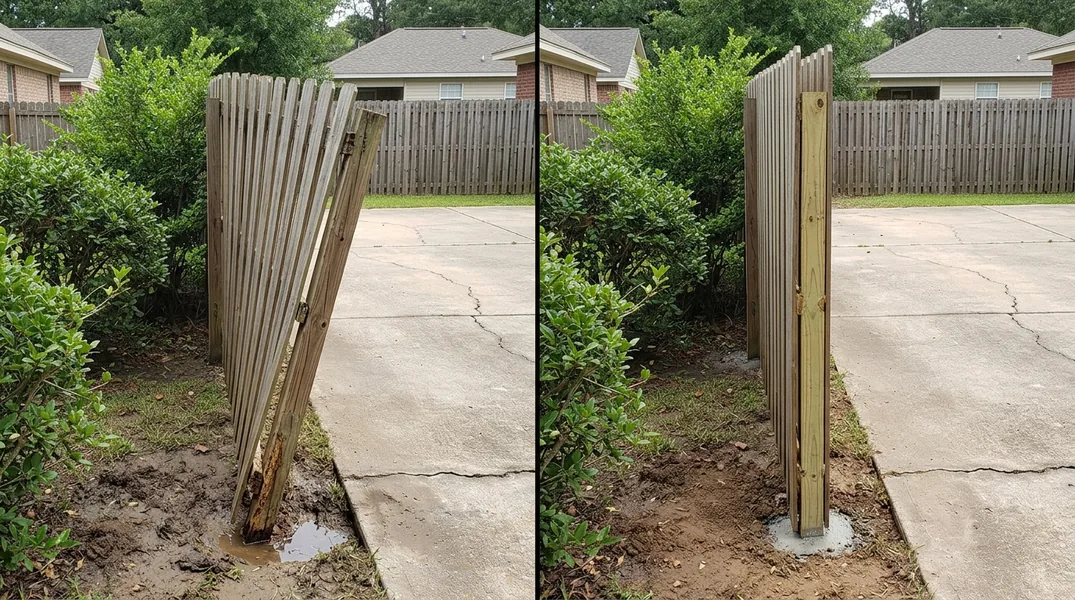
Understanding Red River Valley Clay and Its Impact on Fence Posts
If you live in Shreveport, you've probably noticed that the soil here is distinctly different from other parts of the country. The Red River Valley clay that underlies our region is famous for its fertility and agricultural productivity, but it presents unique challenges for property owners installing fences. This clay soil is dense, heavy, and prone to significant expansion and contraction as moisture levels change with the seasons.
When you dig a hole for a fence post in clay-heavy soil, you're working with material that behaves very differently than sandy or loamy soil found in other regions. Clay particles are extremely fine and hold water like a sponge. During wet seasons, the clay absorbs moisture and expands, pushing against fence posts and shifting them out of alignment. During dry periods, the same clay shrinks and pulls away from the post, creating gaps and allowing the post to wobble. This cycle of expansion and contraction is one of the primary reasons why fence posts work loose over time in Shreveport and the surrounding Red River Valley region.
Why Loose Fence Posts Are More Than Just a Cosmetic Problem
Many homeowners assume that a slightly loose fence post is just an aesthetic issue, but the reality is far more serious. When fence posts become loose due to clay soil movement, the structural integrity of your entire fence system is compromised. A Wood & Privacy Fence Installation is only as strong as its foundation, and loose posts undermine that foundation immediately.
Loose posts create a domino effect of problems. They allow panels to shift and sag, which increases stress on adjacent posts and fasteners. Over time, this stress can cause boards to crack, split, or warp. Wind loads become more dangerous when posts aren't firmly anchored, and a fence that should withstand a strong storm may fail catastrophically. Additionally, loose posts make it easier for gates to swing out of alignment, and they compromise the privacy and security benefits you invested in when you chose a fence for your property. If you've noticed your fence posts moving or your panels sagging, it's time to address the underlying soil issue before more damage occurs.
Do I Need a Permit for a Fence in Shreveport? Understanding Local Requirements
Before you address the post-loosening problem, it's important to understand the regulatory landscape in Shreveport. The answer to 'do I need a permit for a fence' depends on several factors specific to your property and local ordinances. In most cases, yes, you will need a fence permit in Shreveport. The city requires permits for most residential fence installations to ensure that fences comply with zoning laws, setback requirements, and safety standards.
Fence permits serve an important purpose beyond bureaucratic red tape. They ensure that your fence won't encroach on your neighbor's property, that it meets height regulations, and that it doesn't violate any HOA restrictions if your property is part of a homeowners association. The permit process also gives the city an opportunity to verify that your fence design and materials are appropriate for your neighborhood. If you're planning a new Wood & Privacy Fence Installation or replacing an existing fence, working with a local contractor like Shreveport Fence Pros who understands these requirements can save you time and potential fines. We handle the permit process as part of our service, ensuring your project stays compliant from start to finish.
Fence Height Regulations and HOA Approved Fence Standards in Shreveport
Fence height regulations in Shreveport are straightforward but important to follow. Residential fences are typically limited to six feet in height in most zoning districts, though this can vary depending on your specific location and whether your property is in a historic district or special overlay zone. Front yard fences often have lower height restrictions, typically four to five feet, to maintain sight lines and neighborhood aesthetics. Understanding these fence height regulations before you build prevents costly removal or modification after installation.
If your property is subject to an HOA, the requirements can be even more restrictive. An HOA approved fence must meet not only city regulations but also the architectural guidelines established by your homeowners association. Many HOAs have specific requirements about materials, colors, styles, and heights. Some associations prefer traditional wood fencing, while others may require specific stain colors or prohibit certain fence types altogether. Before investing in any fence project, check your HOA's Architectural Review Board guidelines or contact your HOA directly. Shreveport Fence Pros works regularly with HOA communities and can help you navigate these requirements to ensure your fence gets approval before installation begins. Getting this right from the start prevents delays and the frustration of having to remove or modify a fence that doesn't meet HOA standards.
Fence Permit Cost and Installation Pricing in Shreveport: What to Budget
Understanding the total cost of your fence project means accounting for both permit fees and installation expenses. The fence permit cost in Shreveport typically ranges from $50 to $150, depending on the scope of your project and the city's current fee schedule. While this might seem like a minor expense, it's a necessary part of the process and ensures your installation is legitimate and compliant. When you get a free estimate from Shreveport Fence Pros, we include permit costs in our overall project assessment so there are no surprises.
The total pricing for your fence project depends on several variables: the type of fencing material (wood, vinyl, chain link, or aluminum), the total linear footage, site conditions including soil type, and any special features like gates or decorative elements. In Shreveport, where clay soil creates additional installation challenges, you may encounter higher labor costs than in regions with more stable soil. Our team at Shreveport Fence Pros factors in the Red River Valley clay conditions when providing estimates, ensuring we use proper installation techniques and materials that withstand local soil movement. We recommend getting multiple quotes to compare, but remember that the cheapest option isn't always the best value if it doesn't account for our region's unique soil challenges.
Solutions for Loose Fence Posts: Proper Installation Techniques for Clay Soil
The key to preventing loose fence posts in clay soil is proper installation technique from the beginning. Standard post hole depth and concrete installation may not be sufficient in Shreveport's clay conditions. Professional installers understand that fence posts in clay soil need special attention to account for seasonal expansion and contraction. One proven method is using concrete footings that extend deeper than typical installations, combined with gravel or sand drainage layers that help manage moisture around the post base.
Another critical factor is post material selection. Pressure-treated wood posts are standard, but in areas with extreme clay soil movement, some contractors recommend composite posts or posts with special coatings that resist the constant pressure and moisture changes. If you already have loose posts, the solution depends on the severity of the problem. Minor looseness can sometimes be addressed by adding concrete around the post base, but severely loose or damaged posts typically need replacement. This is where working with experienced professionals makes a real difference. When you contact Shreveport Fence Pros at (318) 666-4472 for a consultation, our team can assess your specific situation and recommend the best solution, whether that's reinforcing existing posts or planning a complete replacement with proper clay-soil installation techniques.
Looking for a professional tree service in Shreveport? Shreveport Fence Pros responds fast for all your fence needs.
Get a Free Quote